Showing posts with label publishing industry. Show all posts

Wednesday, November 09, 2011

Building a Platform

I'm participating in a mentorship program through one of my online writers groups and my "grasshopper" recently asked me this question:

When did you start building your platform? Can you identify the major steps to take? What made a real difference?  
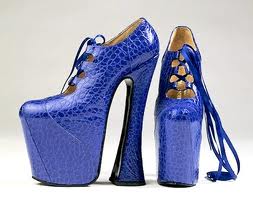
In answering her, I thought I'd just make it into a blog post.

First... I actually don't think it's essential for fiction writers to build a platform before they're published. I know or know of lots of very successful authors who had zero online presence prior to their first sale. A platform will not get you published in fiction unless it's a really awesome one. And wearing these shoes wouldn't count as an awesome platform for fiction, unless your name is Snooki or Lauren Conrad or Tyra Banks.

That said, I am someone who started to build a platform before I sold.

I used to be very active on several writers loops. I did this more to learn about writing and the industry, and to share what I'd learned with others, than to build a platform per se... but I did develop a fairly significant network of writer friends both via loops and via blogging. 

The keys with blogging are at least two fold. First, make your content interesting. And second leave meaningful comments on other people's blogs in the hopes that you'll gain readership either from those individuals or their readers. Or maybe that they'll link to your blog from their blog. It can be a lot of work to do both of those things consistently, so I only recommend this for someone who enjoys it and has time. Also, you have to be careful not to say something that will paint you in a negative light.

And I don’t think that either of those venues are as active as they used to be. More people are now on Facebook, Twitter and Google+.

I was a pretty early adopter of MySpace and Facebook and Twitter and Google+, but I don’t think it’s essential to do these things professionally before you’ve got a publishing contract. The trick is, unless you have really great content on those venues, why would anyone you don't already know follow you before you have a book out? It’s tricky. And is there any point in building up huge numbers of Facebook friends who are mostly interested in either hitting on you via skeevy messages, or asking you to buy them a cow for Farmville? (Asks the girl with 3800 Facebook friends. Do what I say, not what I do.)

Here's my twitter page if you're not already following me there. :)

Some people do social networking extremely well, but I don’t think it’s essential if it’s not something you enjoy. It's easy to get started on these social networking sites, and the main "tricky" thing for a writer is deciding whether to separate your personal identity from your writer identity. If I could turn back time three or four years, I would have set up Facebook differently for sure. Not that I really could have done it the way I wish I'd done it, because it's changed so much.... 

If you're starting on Facebook now, it's a good idea to set up a Page. But again, why would anyone "like" your page before you have a book? So, it's really just preparation and I wouldn't spend a lot of time trying to coerce people into liking your page. You'll just alienate them. Once you have a book out, they will come. ;) Especially if you have links for them to "like" you on your website and in various other places. :-)


My Facebook Page:


And here's a like button for Molly's new Facebook Page:


There are lots of great resources with advice on using social networking but I think the bottom line is be genuine. Be yourself. And again, be careful you don't tweet or post anything you might later regret. What you post online stays there forever. Minimize drunk tweeting. ;) Especially from an iPhone with autocorrect!


In terms of building a platform, one step I would advise writers to take before they sell is to buy the domain name(s) for whatever author name(s) they plan hope to use. There’s nothing more heartbreaking than realizing you can’t get “yourauthorname.com” when you want it. I reserved my website name in about 2003 and launched my website and blog after I got my first agent (in 2006) when I thought I was about to sell. I didn't get my first book contract until 2009. If I could turn back time, I’m not certain I would have put as much time/thought/money into my website. I do love the look of my site. My designer was very talented and really “got” me and my writing that I shared with her. Problem is, I ended up published in a different genre than I was writing at the time and while my website fits me as a person, I’m not sure it fits my current work... And I'll definitely need a new design with the books I have coming out starting next year (that I still can't talk about...)

One clear advantage I saw to blogging when I started, was that before I had a blog, when you googled my name most of the top hits weren’t me. After I’d been actively blogging for just a few months, and other writers had linked to my blog, suddenly most google hits for my name were actually about me and not some other person named Maureen McGowan. But again... that didn't get me published. I just thought it was cool.

If you know you’re going to use a pseudonym, then by all means start to create an identity online under that name, but know that things might not turn out as you plan. Maybe your publisher won’t let you use the pseudonym of your choice. Maybe you’ll change your mind by the time you’re published. Maybe you’ll end up in a different genre than the identity you’ve built up... 

All this said, I think unpublished writers should concentrate more on their writing and honing their craft than worrying about a platform. Platforms are only essential for non-fiction writers. For fiction writers they're just a bonus, not a necessity and won't get your novel published unless your platform is that you're a cast member of a big reality TV show. If you enjoy social networking and have time, by all means. But make writing your first priority until you have a contract. An agent or editor won’t sign you or publish your novel because you have a gazillion facebook friends or a pretty website. In fact, unless they already love your book, they won’t even check to see.

Wednesday, October 19, 2011

Stating the Obvious

Can we all just stipulate that pretty much everyone in the publishing industry wants to make money? (Stipulate is what the TV lawyers say. ;)

There are some very popular bloggers who've gained disciple-like followings by railing against agents and traditional publishers. Also, some of my writers' loops have been inundated with posts from authors complaining about how publishers or agents or retailers (especially Amazon) are just in it for the money, and how these various entities are behaving in ways that support their own interests.

To which I say, "DUH!"

What I don't get is why some--not all--of these posters seem to think that wanting to make money and caring about books/authors are mutually exclusive.

Sure, not every person in the world loves what they do for a living. Lots of people work in jobs or industries because they landed a job there and need to learn money; and so they plod along, caring little for the products or services their employers provide. I used to be one of those people.

BUT, I would assert that this is less true in the publishing industry than most other industries. Why? Because frankly there just isn't that much money in it. Or at best, the risk/reward balance is skewed such that more people earn a very small living than a great living. You don't go into a business like publishing unless you love books. You don't become an agent unless you love reading and writing and authors and books. I read a discussion recently about how it's almost impossible to become an agent or editor unless you have a trust fund or spouse backing you, because the money's so bad or non-existent for the first many years... (That discussion was about whether this "wealthy white New Yorker" preponderance in the industry biases "taste" and what gets published... but I digress.)

It is also true that the big publishers are now mostly all owned by huge multinationals whose CEOs and shareholders probably don't care about books all that much... but editors and publishers, from everything I've observed, are fighting the good fight for books within these huge corporations.

All that said, I think it's the railing against agents that bothers me the most.

I'm not meaning to suggest, for an instant, that agents' motives are altruistic, but I am sick, sick, sick of hearing authors make anti-agent arguments using, "They just want to earn more money."

Of COURSE they freaking do!!! What kind of fairy tale land are you people living in?

Given all the changes happening in the publishing world right now, I'm very interested in discussions about the pros and cons of some of the recent developments... agents being publishers, retailers being publishers, and everyone trying to figure out what's fair in terms of splitting the proceeds from selling a book in the digital age, and whether agents should earn their normal commission if authors self-publish a book the agent once sold (many years ago) or tried and failed to sell, and whether a publisher can consider a book "in print" paying an author a tiny royalty on a book they aren't promoting, but have up for sale on their website...

All important topics. All interesting. Lots of turmoil and new industry "norms" will undoubtedly be worked out over the next several years, and yes, we authors have to stand up for ourselves and our interests as this all works itself out...

But in these discussions, can't we all just stipulate that everyone involved is out to protect his or her interests and turf? That everyone wants to maximize their potential for earning a living? Including authors? Isn't that obvious?

Wednesday, September 21, 2011

Pirates are Funny, Copyright Infringement is Not

Somali pirates aside, piracy of old isn't something people have had to deal with over the past, say, hundred or more years, and at some point during those hundred years pirates have become less something to dread and more something associated with Halloween costumes and children's games. And then along came Johnny Depp and suddenly pirates were not only funny, but also cool and sexy.

So it has occurred to me that the entertainment industry (or whoever started it -- software industry?) made a huge tactical error in calling people who infringe on copyrights pirates. Huge.

Pirates are funny. Pirates are cool. Pirates defy the big bad authorities to claim spoils and get the girls. The general public does not think "criminal" or "thief" or "immoral" when they hear the word pirate.

This has never been more evident to me as it has been during the Toronto International Film Festival (TIFF) these past few years. TIFF has become arguably the most important festival in the world in terms of launching award winning and commercially successful films. And while most of the movies screened at TIFF are made outside of the studio systems, many come to the festival already sold to big distributors who have a huge stake in not having the films leaked before their releases. Hence, it's probably also a great festival for a criminal to attend who wants to record the films and sell the bootleg copies.

I'd say that about 5-6 years ago, TIFF started taking this very seriously. Also because that was around the time that cameras started getting smaller and better quality. And now most of the "bigger" films have burly men in uniforms with night vision glasses standing around the audience watching us watch the film...

The first year the burly men showed up, they were super aggressive at some screenings and didn't even let people take out their cameras during the introductions before the films. (Which led to my tragically blurry photo of Heath Ledger, in spite of only being less than 15 feet away from him, because a big burly man was diving at me as I took it.)

But back on topic, about five years ago they started making announcements before the films to the effect of, "as part of our anti-piracy program, night vision technology may be in use during this screening."

And what happened? Some joker one night made a pirate "Arrr" sound during this announcement. And, as so often happens, it became a tradition. (Kind of like the audience used to clap wildly and cheer for the guy who took away the podium before screenings at the Uptown. I miss the Uptown.)

This year, clearly trying to stop this tradition and probably to make the filmmakers believe that TIFF festival goers do take copyright infringement seriously, the TIFF staff stopped using the word piracy during these announcements. Instead, they started their announcement with something like, "recording the movie is a criminal offense."

But did this stop jokers from saying "Arrrr!" No, it did not. And it still got laughs from the audience. Not from me. As someone trying to earn a living from royalties, I don't think copyright infringement is funny. But after being annoyed for the first few days, I realized I just needed to have a sense of humor about the "Arrr".

Pirates are funny. Copyright infringement is not.

Wednesday, June 01, 2011

Wild Wild West Publishing

I don't think there has been a time since the invention of the printing press during which publishing has gone through such incredible changes.

Yes, I suppose the consolidation that happened over the past few decades, where all the smaller publishing houses were bought by the entertainment multinationals, was big, but I assert that the current changes are bigger. At least from the author's perspective.

A month or so ago, everyone was a-twitter, (literally, and metaphorically), about the news that Barry Eisler and Connie Brockway were leaving their publishers to self-publish in digital format only. And at the same time, that self-pubbed phenom Amanda Hocking was moving to a mainstream publisher.

I wasn't sure what I thought of it all. And I certainly wasn't confident enough in my opinions to say anything publicly. But now that the actual facts re: Eisler and Brockway are out, I've just been nodding my head.

Yes, the world is changing, fast, but at least now their decisions make more sense to me.

When I heard these bestselling authors were self-publishing I thought they were brave, and maybe a little arrogant (to believe their publishers had so little impact on their success), and I did wonder whether they were making a huge mistake or whether they were the smartest authors on the planet, forging new ground, getting higher royalty rates, and getting tons of free publicity by being at the forefront of a new wave (and thereby upping their chances of success).

But now I see that Eisler and Brockway (and Konrath) are in fact going through a publisher -- but a very different kind of publisher, Amazon. A publisher who's going to focus on the digital market, and who's got the marketing savvy and power and cred to up the chances that a book gets noticed. Now that I understand that,  I just think these authors are smart. Probably.

And saying things like print rights are now subsidiary rights of the main digital contract, or print versions of books are great marketing tools for the digital version... Well, that's bold and quite possibly how the industry will develop. Perhaps sooner than any of us could imagine. Who knows....

When did publishing turn from a boring sedate business into the Wild Wild West?

Wednesday, October 21, 2009

Agent Hunting -- A different view

Recent angsty questions on some of my writers' loops got me thinking about how timid writers can be when they're agent hunting.

Yes, while on the hunt, often it feels like agents have all the power. Even once you've got an agent, it can take a while before that power imbalance starts to stabilize (depending on how your respective careers are going). But one thing writers often seem to forget is who works for whom.

To remind us, I thought it might be interesting to boil the agent hunt process down to the business basics.

First, at the risk of going all Econ 101 on you, the reason the power feels out of balance is a matter of supply and demand. That is, there are more aspiring writers and manuscripts, than there are qualified agents. Ergo, agents are a scarce commodity, and even if they're looking for new work, many can afford to be picky when choosing new clients. The more successful they are, the pickier they can afford to be.

But the scarceness of the supply, doesn't change the substance of what's going on when a writer is agent hunting. It doesn't change the fact that the writer is the potential employer and the agent the potential employee, essentially making the agents job applicants.

(Okay, the writer/agent relationship isn't exactly like an employer/employee relationship... but come on, go with me...)

Let's say you're a writer with a manuscript in need of a publishing contract, (and it is a truth universally acknowledged, that a manuscript in possession of good words, must be in want of a publishing contract), and let's say you're not currently represented by an agent. If you're in this position, you've got a job that needs to be done--the job of shopping your work and landing a contract. Some writers will chose to fill the agent position themselves, instead of hiring from outside the firm, so to speak, but savvy writers will have noted that the chances of landing a great publishing contract goes up if they hire an expert, a sales specialist, to handle the part of the transaction.

So, let's say you've decided to find an agent. To attract qualified applicants for this position, you need to advertise. But because you're picky, and smart, and don't want to waste your time interviewing just anyone, you don't put the ad up on Craig's List, you target your want ad directly to those people you hope will apply for the job.

These specialized want ads are called "query letters". Agents currently looking for more work, who were lucky enough to receive one of your ads, and who think the job sounds like one for which they might be qualified, will respond, effectively applying for the position.

But before the applicants can be seriously considered for the job, each must pass a test administered by the potential employer. To pass this test the agent-applicants must demonstrate they understand and love the employer's product and have a plan to find an editor who will feel the same way.

This employment suitability test is administered via something called a "submission", and typically the potential employer lets the applicants choose whether to complete this submission test in a one-stage or two-stage process. For example, less confident applicants (or applicants whose offices are particularly cluttered) might chose to start with a sample of their potential employer's product, often called a "partial", while others may decide to take the entire test at once by requesting to review a "full". Some applicants are so eager, and/or competitive, they ask the potential employer to take all the other applicants out of consideration for a set period of time. This is commonly referred to as an "exclusive", and employers may choose to accept or reject an applicant's exclusivity request.

Agents who pass the submission test are granted the privilege of moving on to the final interview stage, often conducted over the phone, but sadly, many agents fail the submission test.

Why the high failure rate? Can we assume the quality of the agent applicant pool is low? No. It's more complicated than that.

Selling works of fiction is a passionate process, passion's a tricky thing, and sadly some applicants fail to find the requisite level of passion for all the products they apply to represent. Some discover they don't share the same taste as the potential employer, and didn't enjoy the product as much as they'd hoped. Some reach the conclusion that the quality or uniqueness of the product is such that they fear their sales skills will prove inadequate to place it. Still others might fall in love with the product, but don't believe they have the specific abilities and/or contacts with the right editors to do the product justice.

Yes, there are many reasons why agents fail the submission test, but there's no reason for agents to feel ashamed about this, or take it personally. Sometimes the fit simply isn't right. ;-)

Agents who fail the submission test send a letter to the potential employer to announce their withdrawal from consideration for the position. Occasionally, if the agent feels particularly demoralized, he or she might fail to withdraw their application in writing. In these cases, the dejected agent sends out passive-aggressive signals, such as breaking off all communications and/or not reporting their test results for an extended period of time, assuming the potential employer will deduce the agent's failure to pass the submission test.

But most agents will send a written notice of their submission test failure, and these letters are often referred to as "rejection letters". This term is highly misleading slang as they rarely, if ever, contain the word rejection. The letters are simply the agents' notification that they no longer believe they'll be able to adequately perform the job they'd applied for.

If a large number of applicants fail the testing portion of the interview process, or if few potential applicants respond to the initial want ad, it can be frustrating and disappointing for the potential employer. At this point, the employer will have to round up another group of potential applicants, perhaps by using a revised version of the initial want ad, or by widening the pool of applicants to consider.

If a writer has already widened his or her agent search net to include every applicant who shows potential, but has not yet found anyone qualified to hire, the writer has at least three choices. He or she might choose to let some time pass and then try to identify more applicants at a later date. Or, the writer might choose to consider the reasons for feeling unqualified that were offered by the past applicants', and then revise their product to better suit the tastes and skill levels of the available pool of applicants. Or, the writer might choose to return to the research and development stage and create an entirely new product. Then, with a new product in hand, they may return to the want ad stage. Often agents who felt unqualified to represent one particular product may feel better qualified to represent another product produced by that same potential employer -- perhaps using refined production techniques, or a with more inventive overall design concept. Statistical evidence has proven this last option has the highest probability of success.*

Bottom line: no reason to be angsty. As clearly demonstrated by this analogy, we writers are in charge. ;-)

Okay, I'm not that deluded, but maybe if writers thought of it more this way -- trying to find the right person for the job -- it might relieve some of the angst?

Who am I kidding? We're an angsty lot.

* You want a reference for the statistical study? Sorry. Umm... It's confidential. Yeah, confidential.

Wednesday, October 14, 2009

This F*ing Business

I've had a tough few years in this business. Lots of disappointments, lots of questions and reasons to question my decisions, just as I was starting to feel confident. Just as I felt like I was getting a handle on my craft.

But the thing is, that's so not unusual in this business. It lifts you up and then smacks you down. The very lucky few get enough ups to make up for the smack-downs, but even authors who are relatively successful tend to get more smacks than lifts, even though they don't advertise them as much as we yet-to-sell-a-novel writers do.

All that said, we continue to write and pursue publication.

Why?

Masochists, perhaps?

I don't think so.

We do it because we are writers. Because we love creating. Because we love making shit up. Because we love telling stories. Because we love the writing part of the process.

Funny thing is, probably 80% of the posts on this blog are about how tough the writing part is, about it being hard, hard work, about how much we hate it sometimes, about how difficult it is to keep going.

And yet we do. (Drinking helps.)

Everyone reading this who's writing, whether you're completing your first novel, or struggling through your twentieth... Stand up and take a bow. Now. Seriously. And then have a few drinks. You deserve it.

Cheers!

Tuesday, September 15, 2009

Timing is Everything

We joke about timing at our house a lot. My man has a lot going for him. He's handsome. He's smart. He's funny and talented. He does not have a shred of timing. Never has. Probably never will. We plan for his bad timing these days.

In publishing, timing is everything. Landing the right project on the right desk at the right time is the first step. Landing in the bookstores at the right time is a giant next step. Landing in a reader's hands at the right moment is the best step of all.

I was thinking about this the other day in spin class when they played Joan Jett's cover of I Love Rock 'n Roll (don't argue with me, The Arrows recorded it first in 1975). I love that song. It makes me think of those first few years in college, dancing like a crazy woman at parties, being all wild and rock 'n roll-y. There's that line about the boy by the record machine. The one who must a been about seventeen? I was closer to nineteen when the song came out, but it was close enough.

Now, however? Now I have a seventeen-year-old son and suddenly the lyrics to the song stuck in my throat and is wasn't just because we were doing jumps. The song is now ruined for me. Now it's about my kid, not me, and believe you me, if you're eying him by the record machine, you're going to have to go through me first. Okay, fine. I'm not going to be that kind of mother, but you know what I mean!

All of this made me think of books that I read at the perfect moment for their message to reach me. There was Heartbreak Hotel by Gabrielle Burton in my late twenties. The Pilot's Wife by Anita Shreve right after my husband passed away. Little Women by Louisa May Alcott back when I was a girl. Lady Oracle by Margaret Atwood around the time I was getting divorced. Those books spoke to my soul. As a reader, there's nothing sweeter. Every once in a while, I get some mail from a reader who I've touched, whose hands I've landed in at just the right moment, and I'll tell you know, that is the sweetest thing of all.

P.S. Yesterday, actor Patrick Swayze lost his battle against pancreatic cancer. I know I'm a hopeless romantic, but RIP Johnny Castle. Because of you, nobody will ever put Baby in a corner.

Wednesday, September 02, 2009

Asking the Right Questions

Of course, there are no wrong questions when you're learning, but the more you learn about the publishing business, the more you realize how common it is for beginners to ask the "wrong" questions at the outset. I blame the portrayal of the publishing industry on TV and in movies. Ah, if only publishing worked like it does in the movies we'd all be rich and jet setting on all-expense paid tours to well-attended book signings....

Last week, a newly discovered Drunk Writer Stalker, posed a question in the comments of another post. The commenter is an aspiring writer wondering what line at Harlequin to target. And the way he framed his questions reminded both Molly and I of me -- of my six-years-ago self, anyway, so I thought I'd draw on Molly's advice to him for my blog post this week. Notice how I'm stealing from Molly? Shhh... Don't tell her.

Our new stalker's criteria for weighing the pros and cons of different Harlequin lines had to do with comments he'd read (here and other places) about the extent to which the various editors required revisions before buying, and how many books each editor was likely to ask her authors to write every year.

Molly quite rightly pointed out that all editors at Harlequin require revisions for most new authors, before acquiring...

Molly also pointed out that none of the Harlequin lines want one-hit-wonders, so no matter which line you write for, your editor will hope and/or expect you to produce at least two books a year. (Most hope for 3.) That's just what it takes to be a Harlequin author.

When I started writing, I asked different, but equally "wrong" questions about Harlequin. I was asking things like: which line is shortest? Which line is new and more likely to be picking up new authors? Which line fits this story I already started writing before ever reading any Harlequin novels? (Ultimately I chose the first line I targeted, based on the fact the editor of that line was coming to our chapter meeting and taking pitches. Sure, I can make it fit her line. Yeah, sure I can...)

The second of my "wrong" questions above isn't completely wrong-headed, but as both Molly and Stephanie can attest, there's a huge risk selling into those newer lines at Harlequin, because they don't always last. I never even got a chance to submit the second manuscript I wrote, because I was targeting the very short-lived Flipside line.

All this right question/wrong question stuff reminds me of a great talk I saw at nationals this year, given by agent Kristin Nelson, and her client Ally Carter. The format of their talk was a series of "wrong" questions to ask about writing YA, along with the "right" questions.

For example:
Wrong question: "How can I develop a young adult voice?"
Right question: "Will my voice appeal to teen readers?"

or:

Wrong question: "What's the right word count for Young Adult fiction?"
Right question: "How important is pacing in Young Adult fiction?"

And this got me wondering, could we develop a similar list for people who want to write romance but don't know what kind of romance they want to tackle?

Romance is probably the most diverse genre in publishing with oodles of subgenres (just check out the annual Romantic Times award list). Sure, there's a lot going on in speculative/sci fi/fantasy, too... but I really think (contrary to an article done a few years ago in Writers Digest) that romance is the most diverse. That article on genre fiction showed a gazillion different branches of fantasy and sci-fi, but only five or six sub-genres for romance. I thought this was crazy, especially since I could go along the branches on that fantasy/sci-fi tree and tack the word romance after almost every branch to yield a fully formed sub-genre of romance that probably outsells its fantasy counterpart... But I'm going off on one of my tangents... **Maureen pulls herself back.**

So, let's take romance's diversity as a given. If you're starting out, what kind of romance should you write?

Even if you're not just starting out, this is a hard question. The single hardest lesson, I continue to work on learning, is to stop asking: What's hot right now? What are the editors looking for? AARGH.... Get that question out of my head.

Some of the right questions might be:

What books do I love to read?
Do my strengths as a writer lie in fast-paced plotting or slowly-developing, delicious, emotional moments?
Am I drawn to supernatural or suspense or futuristic elements?
Do I like writing tame or hot?
Do I enjoy doing research about historical periods?
Is my natural writing voice formal or casual?
Can I consistently deliver wit in my writing?
Can I write great action scenes, or scary scenes, or really hot sex scenes?
Are my story ideas big enough to carry a 90K+ book, or are they better suited for shorter novels?

But ultimately it all comes back to: "What books do I love to read?"

Sinead and I were chatting the other night about some changes I'm making to my current WIP. My concern (pre changes) was that given the premise and the conflict, the reader would be able to see the climax of my story coming from about chapter 3, if not sooner. I feared readers would know exactly what was going to come between the couple in the end, would see all the decisions and compromises and sacrifices each would have to make. Sure, they wouldn't know the details, but there was no getting around the core of the conflict between these two characters and it was cliche. And I wondered whether if I were reading this book -- even if it had an interesting premise, even if it was fast paced -- if I was 99% sure I knew where the story was leading me, would I just put the book down. (Sure, all romances end in a HEA, it's the climax or black moment that should sneak up and grab you.)

And Sinead, as usual, said something really smart. She pointed out that for the two of us, right now, because we're still sans publisher, (hey, we're publisher free!), we have no one to please but ourselves. And that's perhaps the one luxury of being unpublished. No one to please but yourself. If we don't write books we, ourselves, would like to read, then what's the point? Why not save the "do I really need to write another book like the last one, just to please my publisher and readers" stage until we run up against it?

Right now, we need to write for ourselves. (With an eye to the market of course. We're not that dumb.)

Can you think of other wrong and right questions to ask about writing romance?

And Milo. Ask more questions. Please. :-) We hereby promise never to say you've asked the wrong questions again.

Oh, and to answer your question about whether being a dude will hold you back? Short answer is no. It might even help you because you'll stand out from the crowd of submissions. You might want to use a female pseudonym, but not necessarily. And that's something you don't have to worry about now. That's something you can discuss with your editor after you sell. But contrary to the movies... you won't be jet-setting around on book tours where you'll be outed as a man. You won't need to hire a woman to pretend to be you like Hugh Jackman did in that silly movie. No worries, mate...

Wednesday, August 26, 2009

Ten Laws of Random Observations About Writing Contests

Having just completed coordinating the preliminary round of the Original Golden Opportunity contest, run by my local RWA chapter, I thought I'd try to come up with a list of ten commandments, no, laws no... more like random observations about writing contests.

Ahem....

  1. The entrants with the most elaborate pseudonyms, or who go to the greatest lengths to use only their pseudonyms, are invariably the least experienced and will not do well in the contest. Clearly there are exceptions to this. And I really don't mean to mock. I think back to how choosing a pseudonym was pretty dang high on my priority list when I started writing, cough, seven years ago. Ah, what a naive fool I was. (Okay, now I am mocking, but I'm mocking myself, too, so that makes it okay. Right?)

  2. The category that produces the most erratic scores and the most violent reactions from both entrants and judges is paranormal. I think it's partly because some of the premises are "out there" and not to everyone's taste. One person's "cool" or "dark" is another person's "ick" or "gross". But I also think there are a lot of moderately crazy people writing in that genre. (Me included.)

  3. The judges who were the most keen to judge and were the most insistent that they'd be done on time, when you politely reminded them of the deadline, are the ones who disappear from the face of the planet the second the deadline arrives, never to be heard from again. A curse on you all!!!!

  4. Some judges will clearly not have read a word of the judges' training. Some will have read it, but clearly not have understood much. (hopefully just a few of each)

  5. Entrants (or judges) who don't know how to convert a file to .rtf, or put in a header, or save a file under a different filename, or attach a file to an e-mail, or use paypal, etc... Are likely not to be very experienced writers (or judges). Not that being technically adept and writing necessarily go hand in hand... but if you've had any experience as a writer, if you've ever submitted anything, if you've even exchanged pages with another writer for critique, you've already had to figure this shit out.

  6. The finalists are, by in large, the most experienced, the most polite, the most thoughtful, and the most organized entrants in terms of dealing with the coordinator -- but some finalists turn into Diva Monsters expecting you to be at their beck and call 24/7 once they final, as if you don't have 25 other finalists revising their entries to deal with, too. Not to mention your own life to live. (No Diva Monsters yet this year! Knock on wood. That one was an observation from last year.)

  7. Some people should think before they press send. Each year, I get a few e-mails from contestants who did not do well, who would've been so much better off if they'd taken a day to cool off before telling me how stupid our judges are...

  8. Some people cannot follow instructions no matter how you word them. (Entrants and judges.)

  9. Every year, some great entries fail to final... but, in general, most entries that final are worthy. (But invariably a one or two finalists receive terrible scores from the judge you personally think is the "most competent" of the three judges they were assigned.)

    And now for my potentially controversial Observation #10...

  10. Judges closest to publication, either who've just sold or are on the cusp of getting that first contract, tend to be the harshest critics.
    I haven't done a scientific analysis of this. But when I started coordinating contests, and therefore reading a lot of score sheets, I started to take a harder look at my own scoring and how tough I was being at times. Here's my rough categorization of judges (totally, TOTALLY generalizing -- and if you judged a contest I coordinated, and think I mean you? I don't. Really.**)

    • The least experienced writers (on balance) give the highest scores. "Hey, this is as good as my stuff, or better, so it must be great!" Either that, or they mark everyone down for the same things--typically whatever lesson they've just mastered in their own writing--whether it's a problem in the entry or not. Frankly, I prefer these judges to the next type of judge.
    • Some writers, possibly new, possibly who've been at it for a while, but who either haven't worked very hard at their craft, or simply just don't get it, but THINK they know a lot... make a total mess of scoring. They call someone out for "telling" when the examples given sound like "showing" to me. They "correct" correct grammar. They mark entrants down for not describing how something smells on every page. They don't recognize when an entry's cool, or different, because it breaks some "rule" they think needs to be followed. They simply, IMHO, frak it all up.
    • Seasoned, multi-published authors tend to (usually) be the most fair and realistic. "This is such a cool idea, or such a strong voice, I need to encourage this writer, and give it a really high score," or "This was clean, well-written, and showed skill, but had no spark. I'll give it a good score, but not a top score", or "this poor writer is so clearly a beginner, I cannot crush them. I'll find something nice to say, give it a lowish but not mean score, and move on. Maybe give a few examples of problems and offer a few tips or good craft books, if I have time."
    • Then there are the judges right on the cusp of selling, the ones who are talented and skilled themselves and know enough to separate the great from the good from the ugly. But they might be frustrated they haven't sold yet, and/or are still stinging from bad critiques of their own work in contests. These judges, in my experience, can sometimes be kinda cruel.
      Observing this in other judges gave me pause. Made me realize I'd been guilty of that in the past. Made me work to be kinder, while still telling the truth, on the really weak entries. Made me decide that giving a score below 50% isn't necessary. Below 90% they aren't going to final in most contests, so why rub their nose in the dirt? (But I admit I still have trouble finding nice things to say about weak entries...)
Finally, while I know contests are imperfect and a bit of a crap shoot in terms of which judges you get assigned (and they'd only be completely fair if all entries in a category got the exact same judges, and that's simply not possible, and even then, entrants would be hostage to those judges' likes and dislikes)... Phew. Even, given all that, I have come to believe that contests mirror the publishing business better than most people think.

Generally, skilled writing and storytelling triumphs over the weak, but, just as in "real life", not always. It's all so subjective, and luck is involved. Again, just like subjectivity and luck affect "real life" publishing.

Ultimately, it all comes down to: did the judge (or editor) love what you wrote. And love is, as they say, in the eye of the beholder.


** I especially don't mean you, Bitch. Ignore this if you haven't seen 500 Days of Summer. If you have -- wasn't it great???

Friday, June 15, 2007

Books books books books books

Okay, I should be sleeping right now, so if this post is completely incoherent (or more incoherent than normal) please forgive me.

I spent most of Monday wandering around BookExpo Canada. What fun. My friend Danielle Younge-Ullman, whose debut novel FALLING UNDER, will be published next year by Plume, got some free exhibitor passes for us from some dude she met on Craig's List. Go, Danielle!

Anyway, I had to pretend I was a published author, because that was the closest I came to any of the boxes I had to check to actually redeem my pass for an entry badge, but luckily no one questioned it.

What is BookExpo you may ask? Well, the Canadian one is a small version of the US one, and it's basically a marketing venue/trade show for the publishers (and people in related industries targeting bookstores) to show off the best of their wares for the upcoming season. In addition to the publishers' booths, I was interested to see a very large booth sponsored by a book distributor I'd never heard of before. They had a huge list of the houses they represent in Canada, and basically it seemed to be all the US publishers who don't have Canadian offices/counterparts and some smaller presses, too. So, from what I could gather, instead of those houses having a sales force in Canada, this company basically acts as an agent for them. (I really should have found out more... Maybe I'll do a little research and get back to y'all. Sorry about the y'all. Warming up for Dallas, already.)

The most popular feature of the show seemed to universally be the author appearances. Basically authors show up for about an hour each and give away signed copies of their new or upcoming releases. Free books!

Fellow Toronto Romance Writer, Kelley Armstrong, had one of the longest lines for signings on Sunday, from what I heard, but sadly, I could only go on Monday. (Jean Chretien was there on Sunday, too... Not to mention Clive Barker and a few stars like that.)

The attendees of BookExpo are mostly booksellers and librarians. I'd say at least 2/3 of the name badges I spotted were people who worked at a Chapters or Indigo.

But some other business seems to get done, too. Danielle managed to meet the woman at Penguin Canada who'll be handling her Canadian publicity when her book comes out which was pretty exciting. And I pumped a few people I met to try to improve my understanding of the biz.

I got a HUGE bag-o-books I can't wait to read, including Tom Harpur's new one WATER INTO WINE which looks fascinating, and Jan Wong's RED CHINA BLUES. (Although, true confessions, with great non-fiction like that, I always love the idea of reading the books and buy quite a few that interest me... and then I never seem to get around to actually reading most of them. Most of the non-fiction reading I do these days is writing related and I admit I'm still in the second chapter of Harpur's book THE PAGAN CHRIST.)

The funniest thing I picked up? A little teaser booklet thingy (I'm sure that's the proper marketing term) for a new one of those Chicken Soup books. What's this one called? Chicken Soup for the American Idol Soul. I AM NOT MAKING THIS UP. They are little stories written by past contestents on the show. And some bonus words of encouragement from Paula Abdul. Gah! What is the world coming to?

Another highlight for me was getting a signed copy of NYT Bestseller John Connolly's THE UNQUIET. I admit I'm not a big thriller reader, and have never read Mr. Connolly before, but I'll read this one. What a charmer. He was too good looking for it to be legal, and when he noticed my name he asked if I was Irish, and I started babbling like an idiot and basically told him my entire family tree. I think what came out was:

MM: "Actually, I'm only 5/8 Irish."
JC: "Well, that's pretty good."
MM: "I've got some Scots blood, too."
JC: "We can forgive that."
MM: "And some Welsh."
JC: "Oh, can't forgive that."
MM: "And some Flemish."
JC: "Now the Flemish is interesting."

Witty banter. We're opening in Vegas in 2 weeks. LOL. Anyway, while I was embarassing myself, he was busily signing my free book with what I assumed was his stock book signing "happy reading" or whatever. What I actually got was: "To Maureen, my fellow Irishman (5/8)
Peace and Happiness, John." and a big smiley face.

So sweet.

Also got to say a quick hello to Tish Cohen again, author of TOWN HOUSE, and got a copy of her upcoming middle-grade release THE INVISIBLE RULES OF THE ZOE LAMA which looks like a very fun read.

So, all in all, in terms of days I should have been writing but wasn't, I don't feel too guilty about this one. A day well spent.

Wednesday, May 16, 2007

Life in the Casino

The world of publishing is a confusing one. On the one hand, it's a business. Obviously it's a business. Publishers aren't there to lose money. Writers expect to get paid for their work and all the many other people involved (agents, editors, book designers, sales and marketing people) expect to get paid, too.

On the other hand, publishing falls clearly in the arts with one big foot in the entertainment industry. Many other discliplines in the arts require fundraising or grants (public or private) to exist (ballets, theatres, art galleries) but publishing does not.

Because of this one foot in the arts and one foot in business dichotomy, publishing, in many ways, doesn't (thank God, in my opinion) follow many of what would be called "best business practices" in other industries. If it did, then only the sure things would ever get published. And only the lowest common denominator of reader (in terms of taste, education, etc.) would be catered to.

Now, some may argue that's already true. But I think that's too cynical. (And this from a known cynic.) Lots of really different and exciting and challenging books get published. Books I'm sure are considered a HUGE gamble by everyone involved and that are published not because anyone can produce a spreadsheet or report predicting with any accuracy how well it will sell, but simply because those involved in the process LOVE the book and believe in it. Often it's those books that break through and sell well. Often it's not. Often it's the ones with more obvious mass appeal that do well... And nothing wrong with that either. Point is, there's still room for lots of different books to get published. (Just not room for as many as those of us hoping to join the ranks of published authors would like.)

I found the recent article in the New York Times very fun and interesting to read. http://www.nytimes.com/2007/05/13/business/yourmoney/13book.html?_r=2&h&oref=slogin

I'd read a similar (but much less accessible) essay on this topic written by a British statistician, a few years ago, but can't remember the man's name. One of the arguments I do remember him making in his essay stood out for me, though. He argued that if Yann Martel hadn't received so many rejections from all the big publishers for Life of Pi, it never would have become a bestseller. Why? Because a bigger house wouldn't have put him forward for the Booker prize (they would have nominated one of their bestsellers) and it was only after winning that prize that the book got so huge. So, if he'd sold sooner and to a bigger house, (even the publisher of his first two books which passed on Pi, it probably would have languished on the shelves and sold a few hundred copies. (Most people don't realize that of Life of Pi was first published by a small press and only picked up by the big boys after it won the prize.)

Moral is, Many different random stars need to align for even the best books to get noticed.

My favorite line of the whole NYT article comes at the end, where Sittenfeld states that an editor once told her, “People think publishing is a business, but it’s a casino.”

Yes, it's all a big gamble.

Every time a writer sits down at her computer, she's taking a huge risk. Spending hours, weeks, months, years working on something that may never earn a penny and that others may not like. Every time an agent takes on a book or a client he/she's taking a risk that he/she'll spend a lot of time/effort trying to sell a book to no end. Every time an editor decides he/she loves a book she's taking a risk on her credibility and her job by telling her bosses at the publisher she thinks they should spend money on acquiring the rights to publish it. The publisher is taking a risk that the editor is right. The publisher also takes a risk when they decide how much of an advance on royalties to pay an author, how much publicity to do, how much co-op advertising (usually zero) to engage in, etc. etc. etc.

And it's all a big crap shoot.

Just a few days before I saw that NYT article, I found these statistics in a Harpers magazine. (On the always fun and interesting Harpers List page.)

  • Minimum number of different books sold in the US last year based on Nielson Bookscan: 1,446,000

  • Number of these that sold fewer than 99 copies: 1,123,000

  • Number that sold more than 100,000 copies: 483

A bit depressing? Sure. But it's just reality and further proof of the whole casino theory.

Better get back to rolling the dice.

Friday, April 06, 2007

Control:

If there’s a theme for the week here at Drunk Writers, it has to be there’s little you can control in this business except the writing, your own promotional efforts and your knowledge about the business.

But that’s actually not true. As unpublished authors, we have all the control.
(stop snickering in the wings, it’s true)

Picture this. I finish the best book I’ve ever written. I think it’s fantastic… (this is very hypothetical)

So I draw a short list of agents to send it to. I have the control initially in choosing which agent I would like to represent me and my work and in a wonderful, perfect world, more than one wants to represent the work, then I get to choose which one.

Secondly, the writer does have a significant say over where our agents send the book. Hopefully we have the right person representing us, so we trust their judgment, but again, this is ultimately our choice.

And we can say yes or no to offers.. (again, stop snickering… I know this is stupidly hypothetical), but I have heard of authors having a choice between publishers if the project is really hot.

Once the publisher takes over, we definitely lose control, over covers, back cover blurbs and the promotion the publisher chooses to do, but if we chose well, then there should be trust in our editors.

Now I know what I’ve just described is highly unlikely.. and when the rejections start coming in, hard not to leap at the first offer that comes along. Hell, did it myself, and came to regret it. Leaping at the first agent cost me time, too much time.

But I did learn to take back some control. I don’t have to sell the first book I write, or even the second, or third, but I do want to feel like I have control. I have a short list of agents, it changes, but it’s not huge. They are all well established and well regarded. If I don’t snag one of the short list with my current project, then I’ll try with the next book.

It might sound foolish to some, but I firmly believe no agent is better than a bad agent.

What’s harder for me is keeping confidence when getting rejections. But here what we all need is an unshakeable faith in our writing and what we choose to write. Not to the point where I don’t listen to criticism, but just a belief that my flawed heros and heroines are interesting to more than just me, and my stories are worthy of publication on my terms.

And if I don’t get there with the current book, then I’ll get there with the next one.

Because it starts and ends with the writing.

Wednesday, April 04, 2007

Concentrate on What You Can Control

This seems like such an obvious thing, but for me it's one of the hardest things to remember.

I attended the NEC conference last weekend and the breakfast keynote speaker was Lisa Gardner. I've heard Lisa speak a few times before and she's always amazing, but a few things she said this weekend really resonated for me.

The main thing that hit me in the gut was that publishing and writing are two different things, and as writers the only part we can control is the writing. (Okay, I guess if you self-publish you can control the publishing part, too... but you can't control whether or not anyone will buy, enjoy or review your books in that scenario either.)

The tricky part of this for me is that, well, I'm beginning to realize I'm a bit of a control freak. At my age you'd think I'd have discovered this about myself before now, but no -- a recent revelation. And second, while we can't control the publishing part, I do think it behooves us as writers to be knowledgeable about publishing and to be in control of our careers. Sure we entrust agents to sell our work and publicists to make sure readers find out about it. We hire web designers to create a face-to-the-public look. We sell our publishing rights to publishers entrusting editing, book design, cover art and a myriad of other things to them. But as much as we need to be educated about the industry, to know what we want for our careers and to stand up for it to increase the odds that the other players understand and buy into and support our career vision... Ultimately the only thing we can control is the writing. The stories we choose to tell and how we tell them.

We can't control market trends. We can't control exactly which editor(s) our agent chooses to send our projects to. We can't control what those editors saw immediately before our work or what biases they may bring to the table. We can't control if they offer a contract or how big an advance. We can't control the cover art chosen or the print runs or how many copies the booksellers will buy or how well (or even if) we'll be reviewed. We can't make Oprah choose our books for her bookclub.

So. We write.

Sunday, April 01, 2007

Ten years in and no closer to the key....

I've been in this business for ten years - and by being in the business I mean I've been submitting proposals to editors who know who I am and seem to like me and my writing.

And still, I have amassed far more rejections than I have paychecks. And, worse I still don't know what's going on. I was originally going to write this blog about how, while I don't understand the business any better than I did ten years ago (when I thought that my first book - like all harlequin novels - would earn me a paycheck of $15,000 - HAH!), I do understand writing better than I did. But then I thought about my current WIP and my last book and what I THOUGHT I had figured out and what I'm screwing up right now and - stupid me - I haven't gotten anything figured out. At all.

The business aspect of writing mainstream genre fiction is like one of those puzzles that if you stare at it the right way or for a long period of time you think you might see...yep...there it is...a cat in sunglasses. But then you look away to tell your friends and critique partners what you've seen and when you look back at the puzzle --- it's just a bunch of green and red pixels again. No cat. No sunglasses. No sense.

Maureen's story about getting a rejection from a proposal she sent a year ago to a house that she'd been TALKING to a few months ago about a different version of the same book -- literally boggles my mind. As I wrote that sentence I had to drink vodka right from the bottle - that's how painful that is. The countless good books that don't get bought because they aren't marketable or don't have vampires or werewolves or time travelling elfs doing nasty things to each other on every other page - can really - when thought about - piss me off. Especially when half the time I'm starving for a good book. (not this week though-- dear God the reading pleasures I've had). The strange and mysterious etiquette involved when hiring an agent who - WILL BE WORKING FOR YOU! It just doesn't make sense. Our publishers want to sell loads and loads of our books and then give us terrible covers. People get paid money to create covers - just like they are paid to hit home runs every single time they are at bat - so why do we stand for crappy non-descript covers that look nothing like our characters and take place no where near our setting and involve explosions when we've written a nice little book about knitting! KNITTING BOOKS - good gravy don't get me started....

But - you all know that -- you're swimming upstream in the same raging river I am. The writing thing though - man, just when you think you've figured something out....something else falls apart. What is happening to me right now at page 86 (same page I've been for oh....three weeks) is like I'm a world champion plate spinner on David Letterman (Drew Barrymore couldn't make it so they called me in...) and I've got the plates spinning off the chair I'm balancing on my nose (character, conflict and pacing ) I've got the plates spinning off the candelabras in my hand (pacing, dialogue and POV) but the plates I just had spinning, just figured out on the very last book, the plates I just looked at and spun - reader expectation and reversals - have crashed to the floor.

I understand that every book is different - characters plot blah blah blah - but I am the same. Me. The writer. Why doesn't this stuff stick like it's supposed to - like "30 days has September, April, June and November" or all those Celine Dion songs I - for whatever satanic reason - know by heart.

Maybe the next ten years will bring me the answer and that $15, 000.

Friday, March 30, 2007

Hurry up and wait.

Been racking my brain to figure out what to blog this week. It’s been a really busy week in my other life, so haven’t even been thinking about writing much.

But from the few conversations with writers I’ve had lately, one common element has surfaced more than once.
The long, long waits we have to endure.

I’ve had fulls with agents now for over 8 months, longer perhaps. I’ve asked for updates and been ignored, and while normally that would frustrate the hell out of me, that I’m working on finishing my current WIP makes the wait much easier.
Nothing seems to happen quickly in this industry.

Even friends who are agented have to endure waits. There’s the wait for their agent to read the manuscript, send it out to editors and then wait for responses.
With the right agent, the waiting for responses won’t take too long, but this too can vary, I know of a few agented authors who waited for responses from editors for up to 6 months. And that’s a good agent.
My own personal experience is, if an editor doesn’t respect an agent, the submission is treated basically as slush. In which case, why have an agent… but that’s a whole different blog….

Even the published authors I know have to wait, months sometimes, for their editors to approve proposals, approve finished manuscripts and yet are given very little time to work on art sheets, line edits.
But that’s the nature of this business. I imagine when you become a bestselling author, wait times dramatically reduce..

How do I deal with waiting? Well in my stupider days, I allowed myself to become distracted, didn’t write much, and basically sat and day dreamed about the ‘call’. Now I write and concentrate on the next book I’m sending out. It helps me deal and allows me to do something positive.

How do other people deal? Anyone know of those wonderful stories where an author got an agent and a book deal with in a week?

Just curious, if anyone else’s experiences are different from the ones I know of..

Tuesday, March 13, 2007

Images and brands and websites, oh my!

I've been working with a designer on a website this past week and struggling with a bit of an identity crisis. The designer went way above and beyond the call of duty creating about 3 times as many preliminary designs for me to consider than we'd originally agreed on... And yet, none of them seem to be quite right. I'm torn between two choices and they're very different from each other.

And I know I picked a good designer. And I know she "gets" me. But we're both having a terrible time finding some kind of graphic image or photograph (at a reasonable cost) that really represents me. It's like every commercial graphic artist over the past ten years has drawn images of women in the same style, and to me that style's not only boring and overdone but also "too cute" or "too silly" for what I write.

I guess my identity crisis stems from the fact that if I know what I want and can't find an image to represent it... Is what I want too out there?

One issue is that I don't write in a super-distinct genre. Yes, I write commercial women's fiction, which is certainly a genre, but a pretty broad and loosely defined one. And what does "commercial women's fiction" mean, anyway? To me it means books for women that hopefully will have a wide appeal, because they're fun, easy to read and have happy endings. Hmmm... Is that the definition of commercial vs literary women's fiction? Might be. But obviously romance meets that description and so does chick lit... So it has to be refined to also say "where the main plot is not a romance". And maybe "where the heroine isn't a twenty-something woman trying to find herself". But that's where the definition becomes trickier... because I think the chick lit genre is really defined by voice more than plot and frankly has also been defined by the graphic images put on the authors' books and websites...

So where I have trouble with an exact definition of what I do write... I do know what I don't write. I don't write literary fiction. I don't write thrillers. I don't write romance. I don't write chick lit. Although what I write is much closer to chick lit than it is to romance... I've heard the term up-scale chick lit bandied about and I guess I wouldn't hate it if someone used that to describe my work. But all that said, I don't want my website to look like a stereotypical chick lit writer's website. I want something different. I want my website to say, hey! Here's someone coloring outside the lines a little. Someone who might make me think as well as laugh. But I also want to appeal to a wide audience...

What's a kind of artsy writer-chick to do?

How do I create an image that represents "me", "my writing", "my brand", when I still haven't sold a book and am miles away from having an actual book cover?

Some may ask, "Why bother trying?" Or at least, "Why stress about it so much?" But I disagree. I have a suspicion that this may be the only point in my entire writing career where I have any real control over my image. Once I do sell a book, people in the publishing house's marketing and art departments, who'll probably only read little snippets of my book, will start making these decisions for me. And I know I'm probably naive about this next bit... but if I've already created a strong image or brand, my eventual publisher may use that as a base or inspiration for my book covers. (Okay, maybe that's delusional... but possible? It's certainly not possible if I haven't done it.)

One way or another, I do think it my website is important even though I don't have any books yet.

Am I putting too much pressure on myself? Sometimes I wish all I had to do was write.

Friday, March 02, 2007

Genre Fiction vs Literary Fiction...

I don’t have many more interesting things to say about the Oscars. I love them for the pomp, pretty dresses and the annual pat on the back for an industry who really doesn’t need any more pats on the back.

But I also know they don’t usually give the Oscar to the best picture of the year. The best example I can think of this is when Forrest Gump beat out Pulp Fiction for best picture. Or Roberto Benigni beating out Edward Norton for best actor. Sometimes the choices haven’t made sense to me. But, it's all subjective.

I have no literary aspirations, none. I’m interested solely in telling entertaining, engrossing stories and in my over simplistic approach, that’s how I assess everything. To me the best in literary fiction and in genre fiction tells a fascinating story with engrossing characters.

Books like the Poisonwood Bible, Fall on Your Knees, The Lovely Bones and so many more I could list, all tell amazing stories. The best in genre fiction, be it Stephen King, Michael Connelly or Susan Elizabeth Phillips, also all tell amazing stories, and hey look, they’re bestsellers.

I’m sure there are some wonderful literary authors who write incredible books who toil in mid list obscurity, as well as some amazing genre authors, but great stories connect with a wide range of people and subsequently sell a lot of books.

So to the literary author who grouses they don’t get the sales or publicity of a Stephen King, I say write a better story.

Simple, but that's what genre writers know, that perhaps Literary authors are still trying to figure out..

Tuesday, February 27, 2007

Comedy is to the Oscars as Genre Fiction is to Literary Awards

Watching that very funny musical/comedy number done by Will Farrell, John C. Reilly and Jack Black at the Oscars, it occurred to me that the way popular movies (not just comedies) get ignored at the Oscars, is similar to how genre fiction gets ignored by the literary so-called elite. Okay, there are exceptions some years at the Oscars, like Titanic, but generally most popular movies get ignored. Where were the nominations for Casino Royale this year?

The literary world holds even fewer exceptions. Stephen King winning Distinguished Contribution To American Letters at the National Book Awards is one. But the controvery caused by granting him that award proves my point. Genre fiction gets no respect. If you haven't read Stephen King's acceptance speech, you should.

Recognizing this parallel to the Oscars "comedies are excluded" number, I planned to do a tirade-type post complaining (once again) that genre fiction -- and the genres written by women for women in particular (e.g. romance, women's fiction, chick lit, cozy mysteries) -- "don't get no respect", but over the past 48 hours I mellowed and started to see things differently. In fact, I ended up changing my mind about the theme of this post all together. (And maybe growing a little in the process. Awwww. See? A character arc, even in my blog post. Am I a genre writer or what?)

So what caused my change of heart? I suppose what it boils down to is I'm glad we live in a world that still honors and supports creative pursuits not embraced by the mainstream. I'm glad that edgier, avante guard, experimental, controversial, slower paced, offensive to some, alternative art still gets produced/published/shown in galleries/recorded whatever. The world would be a very bland place if our only art and entertainment options were loved by all and hated by none.

And maybe mainstream entertainment doesn't need awards and critical praise. Work embraced by the mainstream gets other rewards -- public acclaim, money, fans. The creators of popular work get both the satisfaction of creating their art and of knowing that others enjoy it. I suppose we can let the non-mainstream folks take home the awards and glowing reviews.

Writers of literary fiction like to complain that genre fiction is taking up too many places in publication schedules, too much space on bookstore shelves, (ref. that ridiculous NYT column written by Maureen Dowd a few weeks go), but writers of literary fiction don't have much to complain about from where I sit. If publishers were only interested in money, they wouldn't publish any literary fiction. Hollywood, on the other hand, has all but stopped producing interesting/risky films such that an independent film industry had to step in to fill in the void. So far, the major publishing houses haven't followed suit. They haven't moved away from literary fiction just because Nora Roberts and Stephen King and Jennifer Weiner sell better, increasing the odds that debut writers writing in similar genres wil sell well, too.

And if it takes a somewhat snobbishly-biased reviewing and award system to support the "different" "riskier" books, the books less certain to sell well, maybe I'm all for it. I love literary fiction and would hate it if those reading choices were no longer readily available in my book store.

I only wish the system didn't have to turn its collective nose up, quite so obviously, at genre fiction.

But I don't think we writers of genre fiction should whine about this. (And this is coming from someone who has whined about it to her friends and family -- a lot.) Sure, the fiction I write is unlikely to ever get reviewed in the "best" places. My books will never be nominated for the Giller, or the Governor General's Award or the Booker. They won't be picked as Oprah books or be defended on Canada Reads. Even if my books become bestsellers (dare I dream?), I'm unlikely to get invited to speak at a PEN luncheon or do a reading at Harbourfront. If I join the Writers Union of Canada I'll probably get sneered at when I tell my fellow union members what I write. (This based on an author I know's experience at a union party at Margaret Atwood's house and another's experience at a Word on the Street event in Vancouver last year.)

But I'm starting to realize that the only problem with all this, is that I let it bother me.

Jack, Will, John. Take note. Your comedy work doesn't get much respect, but people love it. Love that.

Wednesday, February 14, 2007

Advice—Sifting the Good from the Bad

These days, there’s a lot of advice out there for aspiring authors. This is one of the best (and I’m going to argue, potentially the worst) things about the internet, on-line loops, list-serves, blogs, conferences, writers’ groups, workshops etc.

Molly’s great talk and blog on beginnings—particularly her point that if you believe all the advice you’ve heard about how NOT to start a book, it would be impossible to start one at all—combined with me extolling the virtues of reading industry blogs last week, spurred me to think about how hard it can be, for newbie writers in particular, to sift the good advice from the bad.

And newbie probably isn’t the right word. And it’s a totally subjective thing, anyway. I think some people who decide write educate themselves quickly (Sinead) and stop being newbie writers within the first year, even if it takes them another ten to get published (but it’s not going to take Sinead that long). Others are still newbies after publishing their tenth book. (No names mentioned here, but definitely NOT Molly.)

My point is, a newbie in the context I mean here, is anyone who gets confused/overwhelmed by conflicting advice. She/he hears advice and lacks the filters or experience to decide whether it ends up in the good advice or bad advice bin.

And there’s a LOT of bad advice out there. A LOT. And to complicate things, what I consider bad advice, others—at least the person offering it—considers good advice. So what’s a writer to do?

For me it goes back to what I’ve said on this blog before. You have to decide what kind of career you want. What kind of a writer you want to be. Then knowing that, you’ve already got your first filter. Does this make sense for the type of career I want. Does the person offering the advice have the kind of career I want? Write the type of books I write?

But even then, each successful author’s story is a little different. For example, some will say get a great agent first. That is, never submit to editors without an agent because then if you get rejected, agents won’t touch your project because it’s already been shopped. On the opposite side of the advice wall, others will insist it’s much easier to get a publishing contract than literary representation, so you should submit to editors and once you have a contract in hand, call your top five dream agents and choose one then.

I know people who’ve been successful both ways, but personally, in sifting through this particular instance of conflicting advice, I thought about what kind of career I wanted, what kind of publisher I wanted (did they even look at unagented submissions), how many years ago the authors offering the advice first sold and who they sold to. Also what other circumstances may have come into play—like what the market was doing at the time, how they met their editor if they did the editor-first route etc. After applying those filters it was clear for me. I took the get an agent advice.

Another thing it’s important to remember when reading advice is that there are no absolutes. Nothing in writing is black or white. (Except maybe paper and ink?) Diana Peterfreund has a great series of articles on “Good Advice Gone Bad” I wish I had written. They basically all make the point that if you take any piece of advice too literally, you’re probably making a mistake. The articles are indexed at the side of her blog. Check them out.

So when you hear/read some advice (including what I’m writing now, LOL) the first thing to consider is who’s giving the advice? Check out their books, their website, other things they’ve said. There are (in my not-always-as-humble-as-it-should-be opinion) some real idiots out there on the loops offering up their “wisdom” to the masses. And I’m sure there are people out there who think we drunk writers are idiots. (They’re wrong. At least about Sinead and Molly.)

It's also important to understand the reasons behind any particular piece of advice. Don't just accept it as a "rule". I think this is particularly true with advice on craft. I mean, of course you can have a flashback in a book. Lots of great books have flashbacks. But I think it’s important to understand why Jenny Crusie and many others think they are a very bad idea. She’s smart and her reasons make sense—but that doesn’t mean that, after knowing those reasons and thinking about your particular book, that a flashback won’t be the very best way to tell your particular story. Just be honest with yourself.

Another thing to remember with craft advice: there are many, many ways to say roughly the same things. Three act plotting, four act plotting, hero’s journey, heroine’s journey (all loosely the same thing); inciting incident, put your hero up a tree, first point of conflict (all loosely the same thing); turning points, plot points, reversals; black moment, climax; GMC, conflict, tension; outlining, storyboarding… And two great books on writing (McKee's Story and the Browne & King book on editing) both use the term "beats" and mean something completely different.

There are as many ways to think about writing as there are writers writing who enjoy writing about writing. (Phew!)

Don’t get bogged down in the vocabulary or conflicting advice. Learn what you can, figure out what works for you and then JUST DO IT. (Am I going to get sued by Nike now?)

Tuesday, February 06, 2007

Agents Who Blog

Any readers of this blog who know me at all, know I believe that, with very few exceptions, if you want a career in mainstream publishing, you need a good agent first. (The main exception in the non-vanity print publishing world is if you're targeting Harlequin -- but even there, while an agent won't necessarily get you more money or better terms on your first few contracts, a good agent who understands HQ can really help you grow your career with them.)

This in itself is another topic, but today I wanted to talk about one way to help you land an agent if you don't have one — reading agent blogs.

Now, don’t get me wrong. Reading and commenting on agent blogs isn't going to get you signed up with an agent, per se. And I think it's ridiculous to think that sucking up to agents on their blogs would in anyway increase your chances of getting signed. Let's all repeat together. It's about the writing. (AND It's about the agent’s personal tastes and preferences and what they're looking for.)

That said, one of the best ways, in my opinion, to increase your chances of signing with a good agent, is to improve your knowledge of the industry, and if you don’t have the bucks to attend a whack of conferences, agent blogs are a GREAT way to learn about the industry.

Whether it's Miss Snark ranting about nitwits (while swilling gin and lusting over George Clooney), Kristen Nelson picking apart contract clauses, The Knight Agency offering frequent chats with their authors, or Rachel Vater publicly culling her query pile and exposing the plot devices which have become most cliché, there’s a wealth of information on these blogs. Plus, they’re often entertaining. Who knew so many agents could write? (Well, I did… Deidre Knight is an author as well as an agent… So is Donald Maass (under a pseudonym), but I digress.)

As great as AgentBlogLand can be, it’s not all roses. Lately, there’s been a disturbing trend on one blog I read for some anonymous commenter to attack the agent, agents in general and some of the authors who frequently comment there. Crazy! What is the point of this? But knowing that such people exist, is in itself educational, if depressing.

Educate yourself. Go wild.

Here are some spots to do it.

Miss Snark
The Knight Agency
Deidre Knight (this is her author page, but she talks about the industry a lot)
Nephele Tempest
Kristen Nelson
Jennifer Jackson
Rachel Vater
Lori Perkins
Jessica Faust
Jenny Rappaport
Dystel & Goderich Literary Management
The Rejecter
Jet Reid Literary
Nadia Cornier
Nathan Bransford

Know of any other agents who blog? Let us know. We'll get a list going in our sidebar. I sure wish there'd been more agents blogging when I was looking, but even now that I have an agent, I find so much information on these blogs.

Oh, and it's not a blog. But just in case you don't know the #1 best place to go on the web if you're looking for an agent... Go to www.agentquery.com
Related Posts Plugin for WordPress, Blogger...